
Cupping Therapy
Myofascial decompression used within physiotherapy — negative pressure that lifts the fascia and the muscle layers beneath it, alongside the rest of your treatment.
Call To Book 07346 812150What it is
Myofascial decompression
Cupping therapy is a myofascial decompression technique used within physiotherapy to alleviate musculoskeletal pain, reduce soft tissue restrictions and facilitate tissue healing.
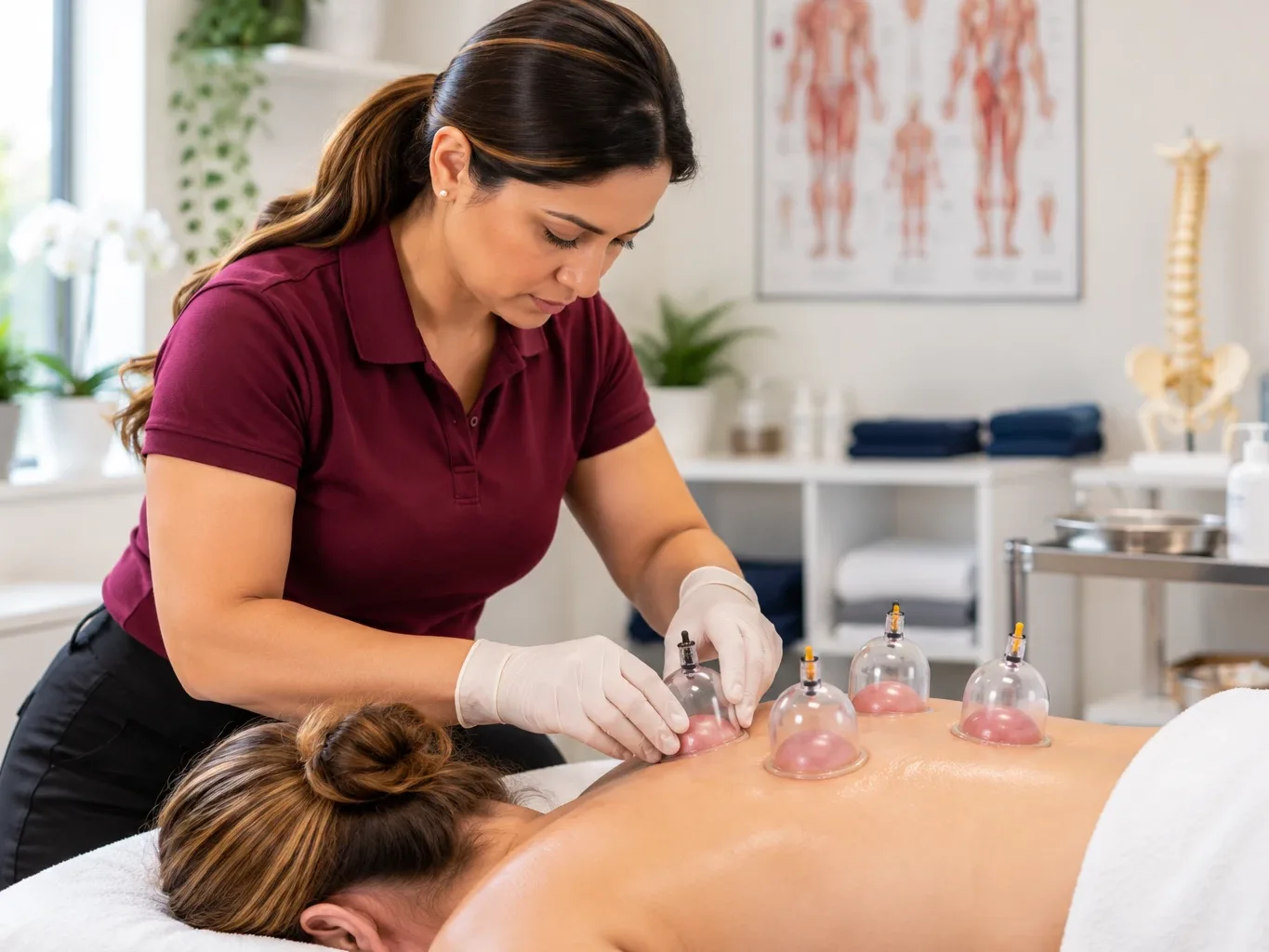
It involves the application of negative pressure using silicone or glass cups placed on the skin, creating a vacuum effect that lifts the underlying fascia and superficial muscle layers.
When integrated with other manual therapy and exercise-based rehabilitation, cupping supports functional recovery and pain modulation.
Who it suits
It may be used for
- Tight, restricted areas that have not responded to hands-on treatment alone.
- Muscle and fascial tightness through the back, shoulders and legs.
- Training-related tightness, alongside rehabilitation.
- Anyone already having physiotherapy here, as one part of a wider plan.
Tell us first if you have
Any of these may mean cupping is not appropriate, or not over that area. It is a short conversation, not a refusal.
- Broken, inflamed or infected skin, or a recent wound at the site.
- Anyone taking anticoagulants, or who bruises or bleeds easily.
- Deep vein thrombosis, or a history of it.
- Pregnancy, over certain areas — tell us and we will work around it.
Understand → Restore → Empower
Understand
An assessment first. Cupping is rarely the whole plan, so what matters is whether the restriction we can feel is the thing limiting you — and whether negative pressure is a sensible way to treat it.
Restore
Cups are placed on the area and left in place, or moved across it, for a few minutes at a time. The pull is firm but should stay comfortable; it is adjusted as we go, and it usually sits alongside hands-on treatment and exercise rather than replacing them.
Empower
You will know what was treated, what the marks are and how long they last, and what to do between sessions. Cupping that is not paired with movement tends not to hold.
Questions people ask
Does it hurt?
You feel a strong pull rather than pressure, which is an odd sensation the first time but should not be painful. Tell us how it feels and we will ease the suction. Nothing here needs to be endured.
Will it leave marks?
Usually, yes — round, bruise-like marks where the cups sat. They are painless, they are not bruises in the usual sense, and they fade over several days to a couple of weeks. If you have an event, a holiday or anything where you would rather not have them, say so before we start.
What do the marks mean?
They are the result of negative pressure drawing blood towards the surface, and the colour is not a diagnosis. We will not read anything into the shade of them, and you should be wary of anyone who does.
Can I have cupping on its own?
It is normally part of a physiotherapy session rather than a treatment booked by itself. If you want it on its own, call and we will talk through whether that makes sense for what you have got.
How many sessions will I need?
There is no set course. It depends on what we are treating and how you respond, and we would rather review it as we go than sell you a block up front.
What should I do afterwards?
Move normally, keep up any exercises you have been given, and expect the area to feel a little tender for a day. Hard training straight afterwards is not the best use of the session.
Ask whether cupping suits you
It is usually one part of a physiotherapy session rather than a treatment on its own. Call us and we will talk it through.
Call To Book 07346 812150