

Pregnancy · Postnatal · Pelvic health · Menopause
Women's Health Physiotherapy
Physiotherapy for the things that are common but rarely talked about. Private, unhurried appointments, at whatever stage you are at.
Call To Book 07346 812150You do not have to put up with it
A great many women are told that leaking, pelvic pain or a stomach that has not gone back is simply part of having had a baby, or part of getting older.
It is common. That is not the same as something you have to live with. Women's health physiotherapy is assessment and rehabilitation for the pelvic floor, the abdominal muscles and the rest of the system around them — and for most people there is more that can be done than they have been led to believe.
Appointments are one to one and private. You set the pace, nothing is examined without your agreement, and you are welcome to ask as many questions as you want.
Ashwini is an affiliate member of POGP (Pelvic, Obstetric and Gynaecological Physiotherapy), a professional network for physiotherapists working in this field.
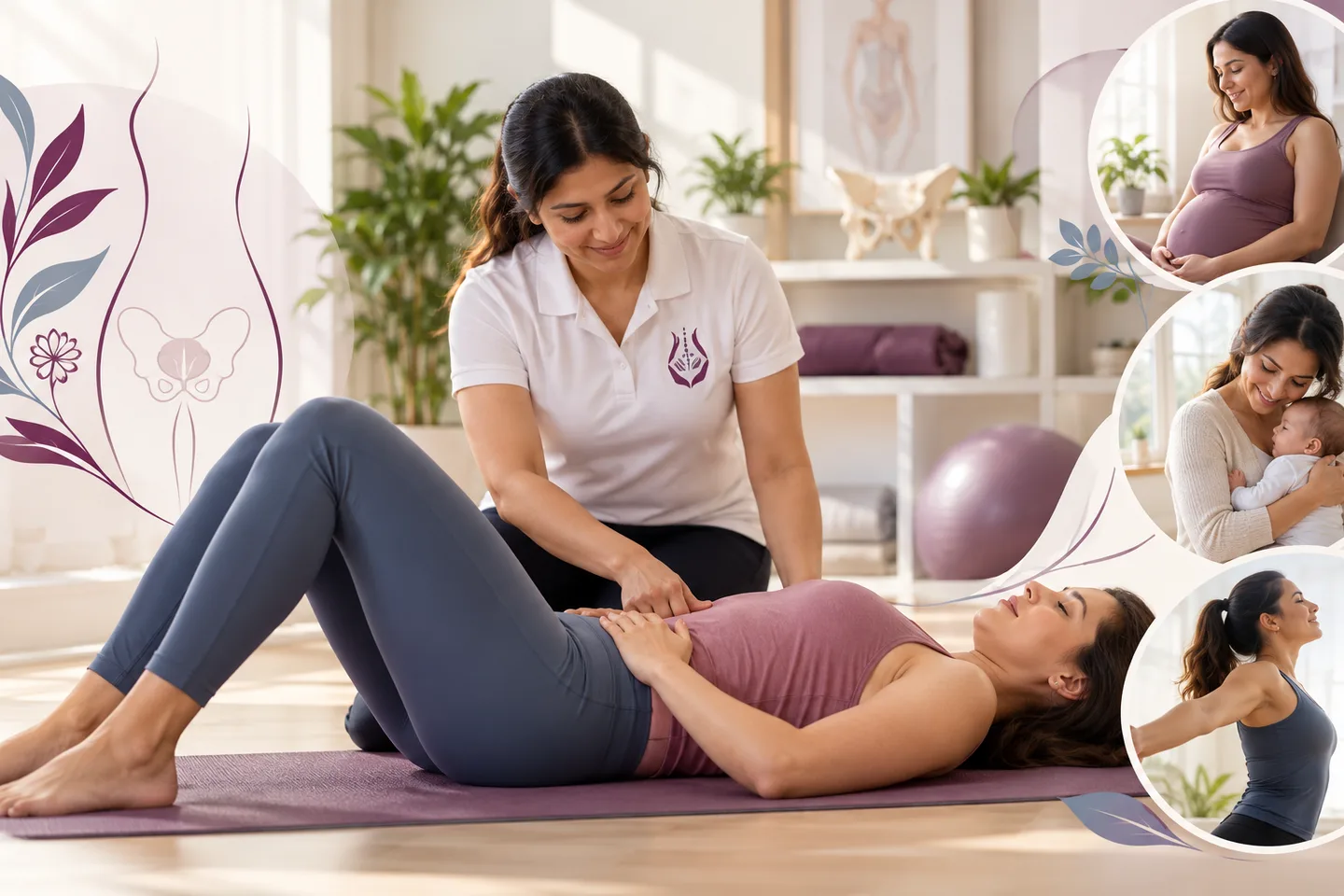
What we see people for
These are the concerns that most often bring people to this part of the clinic. If yours is not listed, call and ask — it does not mean we cannot help.
During pregnancy
- Pelvic girdle pain
- Lower back pain
- Pregnancy-related sciatica
- Rib pain
- Postural discomfort
- General musculoskeletal pain
After birth
- Diastasis recti (abdominal separation)
- Pelvic floor weakness
- Postnatal back and neck pain
- Core rehabilitation
- Returning to exercise
- Caesarean scar rehabilitation
Pelvic health
- Urinary and stress incontinence
- Urgency and frequency
- Pelvic floor dysfunction
- Pelvic pain
- Pelvic organ prolapse
Through menopause
- Joint and muscle aches
- Reduced strength and mobility
- Pelvic floor concerns
- Exercise guidance
Understand → Restore → Empower
Understand
A private, unhurried assessment. We talk through your history — pregnancy, birth, surgery, symptoms, what you are finding hard — and examine posture, breathing, abdominal muscles and movement as appropriate.
Restore
Hands-on treatment where it helps, plus a graded programme for the pelvic floor, the deep abdominal muscles and whatever else the assessment points to. Progressed at your pace.
Empower
A clear plan you can carry on with: what to do, how often, what to expect, and when to push on. Most of the recovery happens between appointments.
Postnatal assessment
The New Mum MOT
A comprehensive postnatal check covering posture, abdominal muscles, the pelvic floor, breathing, core function and movement — with guidance on returning to exercise safely. Worth having at six weeks, six months, or years afterwards.
Questions people ask
Do I need a referral from my GP?
No. You can book directly. If we think another professional should be involved, we will tell you and, with your consent, write to them.
Is the appointment private?
Yes. Sessions are one to one in a private treatment room at the Henley Building, and nothing is discussed outside it.
What should I wear?
Comfortable clothing you can move in. If part of the assessment needs a closer look, we will explain what is involved and why, and nothing happens without your agreement.
Can I bring my baby?
Please call 07346 812150 and we will answer this for you directly.
How soon after birth can I be seen?
Many people come at around six weeks, but there is no cut-off — a first assessment months or years afterwards is still worthwhile. See the New Mum MOT for what that appointment covers.
Do you carry out internal pelvic floor examinations?
Please call 07346 812150 and we will answer this for you directly.
Book a women's health assessment
Call us to arrange an appointment, or for a free, no-obligation chat first if you would rather ask a few questions before booking.
Call To Book 07346 812150